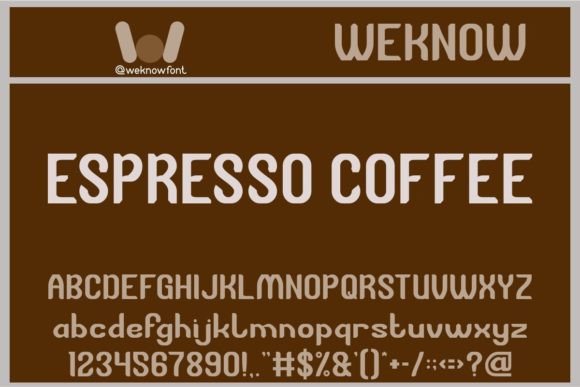
Espresso Coffee Font for Handmade Products
As makers and small business owners, we know that typography is often the difference between a product that looks homemade and one that looks professionally crafted. When designing labels, signage, or digital downloads, finding a display font that balances personality with legibility is a constant challenge. Espresso Coffee is a versatile typeface designed to meet this specific need, offering a sophisticated aesthetic that translates beautifully from screen to physical substrate. For those of us running Etsy shops, creating printable stationery, or designing merchandise, this font serves as a reliable tool for elevating brand identity without sacrificing readability.
Elevating Product Packaging and Labels
The primary strength of Espresso Coffee lies in its ability to add warmth and texture to packaging design. Unlike rigid geometric sans serif fonts that can sometimes feel cold on handmade goods, or overly ornate scripts that become illegible at small sizes, this display font strikes a practical middle ground. It carries enough visual weight to serve as a focal point on candle labels, soap wrappers, and pantry jar stickers, yet remains refined enough for luxury skincare packaging.
When designing product labels, perceived quality is directly tied to typographic choices. A customer holding a jar of artisanal jam or a bag of loose-leaf tea judges the contents partly by the label's design. Espresso Coffee provides that boutique charm necessary for farmers' market displays and online shop listings. Its letterforms have distinct character, making them ideal for short product names, flavor descriptors, or collection titles. However, because it is a display typeface, it works best when used sparingly. Reserve it for the main product name or key selling points, and pair it with a clean, simple sans serif font for ingredients, instructions, or regulatory text to ensure maximum clarity and compliance.
Practical Applications for Cutting Machines and Signage
For crafters using Cricut or Silhouette machines, font selection is a technical decision as much as an artistic one. Intricate serifs and thin hairlines can be nightmares to weed, leading to wasted vinyl and frustration. Espresso Coffee offers a sturdy structure that generally holds up well during the cutting process. The strokes are substantial enough to prevent tearing when applied to tumblers, car decals, or wooden signs, reducing the risk of production errors.
This durability makes it an excellent choice for wedding welcome boards, directional signage, and table numbers. In these applications, the font must be readable from a distance while maintaining an elegant atmosphere. The sophisticated style of Espresso Coffee fits seamlessly into modern farmhouse, rustic chic, and contemporary wedding themes. When cutting this font for physical application, always perform a test cut on your specific material. If you are working with glitter cardstock or textured paper, consider slightly increasing the letter spacing or choosing a bolder weight if available to compensate for any loss of detail during the transfer process.
Designing Printables and Digital Templates
Creators of digital products face unique challenges because the end user controls the final output. Whether you are designing editable Canva templates, printable wall art, or digital planners, the font must look good across various devices and print settings. Espresso Coffee brings a premium feel to digital assets that helps justify higher price points. It is particularly effective for greeting card templates, birthday invitations, and social media graphics where the headline needs to capture attention instantly.
When incorporating this font into sellable templates, consider how your customers will use it. Because Espresso Coffee has such strong personality, it pairs exceptionally well with minimalist handwritten fonts or classic serif typefaces for body copy. This contrast creates a professional hierarchy that guides the viewer’s eye. For example, use Espresso Coffee for the "Happy Birthday" header on an invitation template, but utilize a neutral sans serif for the date, time, and location details. This ensures the template remains functional and accessible, preventing the decorative elements from overwhelming the essential information.
Font Pairing Strategies for Brand Consistency
Building a cohesive brand identity requires more than just a single beautiful font; it requires a system. Espresso Coffee acts as an anchor for creative branding projects. To maximize its commercial utility, consider these pairing approaches:
- Modern Retail Look: Pair Espresso Coffee with a bold, uppercase sans serif font. This combination works well for apparel tags, tote bags, and streetwear-inspired merchandise, creating a trendy, high-contrast aesthetic.
- Soft & Feminine Stationery: Combine it with a delicate script or light serif font. This softens the display font’s edges and is perfect for baby shower invitations, nursery wall art, and jewelry packaging.
- Heritage & Craft: Use it alongside a textured slab serif or typewriter-style font. This evokes nostalgia and authenticity, ideal for coffee shop menus, bakery signage, and vintage-style poster prints.
Consistency in these pairings across your product line helps build customer recognition. When buyers see that distinctive Espresso Coffee styling on your new seasonal release, they immediately associate it with the quality of your previous work.
Technical Considerations and Licensing for Sellers
Before integrating any new typeface into your workflow, verifying the technical specifications and licensing terms is non-negotiable for commercial sellers. Check whether the download includes multiple file formats such as OTF, TTF, and WOFF. OTF files typically offer better support for OpenType features like ligatures and alternates, which can significantly enhance the custom look of your designs. If Espresso Coffee includes swashes or stylistic alternates, utilize them to avoid repetitive letterforms in longer phrases, adding a bespoke touch that sets your work apart from generic template users.
Equally important is understanding the commercial license. As a seller of physical products, templates, or digital downloads, you must ensure your usage rights cover your specific business model. Some licenses permit unlimited physical sales but restrict the number of digital impressions or require a separate extended license for POD (Print on Demand) services. Always review the license agreement included with Espresso Coffee to confirm it covers your intended use case, whether that is selling SVG cut files, creating client logos, or producing merchandise for retail. Respecting these terms protects your business and supports the type designers who create these essential tools.
Ultimately, Espresso Coffee is more than just a decorative element; it is a strategic asset for makers who value both aesthetics and functionality. By applying it thoughtfully to labels, signage, and digital products, and by respecting technical and legal best practices, you can leverage this stylish display font to create offerings that resonate deeply with your audience and stand out in a crowded marketplace.